
Understanding A Sensory-Friendly Classroom
For students with special needs, the classroom environment is not just a backdrop; it is an active part of the learning experience. Sounds, lighting, textures, and spatial layout all affect how a student processes information, manages emotions, and engages with instruction. At Alpha School in Jackson, NJ, we understand that creating sensory-friendly classrooms is essential to helping every student reach their potential.
What Makes a Classroom Sensory-Friendly?
A sensory-friendly classroom is intentionally designed to reduce sensory overload while providing the right level of stimulation for learning. This can include adjustable lighting, flexible seating options, clearly defined spaces for different activities, and access to sensory tools like noise-reducing headphones, fidget objects, or weighted items. The goal is not to eliminate sensory input but to create an environment where students can regulate their responses and stay engaged.
For students who experience sensory processing difficulties common in conditions such as autism spectrum disorder, ADHD, and anxiety, these adjustments can be transformative. When a student is not overwhelmed by their environment, they are better able to focus, participate, and retain new information.
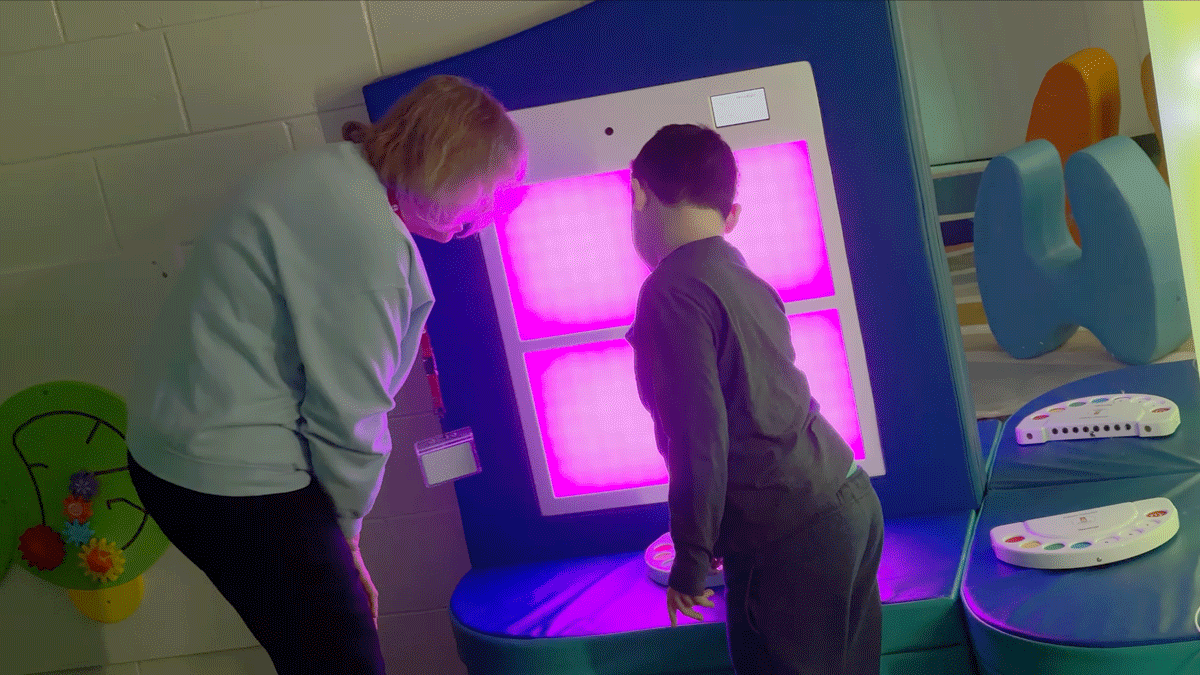
Our Extensive Sensory Room Takes Sensory Regulation to Another Level
Here at Alpha School, our exclusive sensory room is dedicated to a non-traditional classroom approach to support our students. Our sensory room was thoughtfully designed by our Occupational Therapist and Board Certified Behavior Analyst to provide both scheduled and as-needed sensory support for students throughout their day. This collaborative approach between our related services team ensures that sensory strategies align with each student’s individual needs and are integrated into their overall program.
The sensory room offers a controlled, supportive environment where students can access a variety of sensory experiences tailored to promote regulation. These may include activities that provide calming or alerting input, depending on the student’s needs at a given time.
Our team closely monitors each student’s response to sensory input and adjusts supports accordingly to ensure effectiveness and consistency across environments.
The Connection Between Sensory Needs and Behavior
Many challenging behaviors in special education settings are rooted in sensory discomfort. A student who covers their ears during group activities, avoids certain textures, or becomes agitated in crowded spaces may be responding to sensory input that feels unmanageable. Rather than treating these behaviors as disruptions, Alpha School’s team, including occupational therapists, physical therapists, and speech therapists, works to identify the sensory triggers behind them and adjust the environment accordingly.
This approach reduces frustration for both students and staff, and it builds trust. When students feel safe and understood in their surroundings, they are more willing to take risks, try new tasks, and engage socially with peers.
How Alpha School Integrates Sensory Support
Sensory-friendly design at Alpha School is not limited to a single room or therapy session. It is woven into our academic programs, life skills training, and creative therapy sessions. Our certified teachers and trained paraprofessionals use individualized strategies informed by each student’s sensory profile, ensuring that accommodations are consistent throughout the school day.
Small class sizes also play a critical role. With fewer students per room, noise levels are naturally lower, transitions are smoother, and teachers can more easily monitor and respond to each student’s sensory needs in real time.
A Foundation for Growth
Sensory-friendly classrooms are not about making things easier; they are about removing barriers so students can do hard things. When the environment supports a student’s neurological needs, they are free to focus on learning, building relationships, and developing the skills they need for life beyond school.
For New Jersey families looking for a school that takes sensory needs seriously, Alpha School has been providing individualized, supportive education since 1980. Request a tour to see our sensory-friendly learning environment firsthand.
Frequently Asked Questions
A sensory-friendly classroom is a learning space designed to accommodate students who experience sensory processing challenges. It uses strategies like adjustable lighting, flexible seating, defined activity zones, and sensory tools to help students regulate their responses and stay focused. At Alpha School in Jackson, NJ, sensory-supportive design is integrated across all programs for students ages 5–21.
Students with autism often experience heightened sensitivity to sound, light, touch, or movement. A sensory-friendly environment reduces overwhelming stimuli and provides predictable structure, which helps students feel safe, regulate emotions, and participate more fully in classroom activities and social interactions.
Yes. Alpha School provides occupational therapy as part of its comprehensive related services. Occupational therapists work directly with students to address sensory processing, fine motor skills, and self-regulation, and they collaborate with classroom staff to ensure sensory strategies are consistent throughout the school day.
Alpha School serves students with special needs ages 5 through 21 across New Jersey, including families in Ocean, Monmouth, Middlesex, and surrounding counties.

Alpha School a private special education school in New Jersey
Our mission at the Alpha School of Jackson, NJ, located just minutes off of Route 9 and Route 195 in Ocean County, is to help all of our special needs students with the learning, social, language, and behavioral support they deserve. Our highly skilled staff are committed daily to helping each student become the best they can while providing a safe and nurturing educational environment.
We would be more than happy to discuss your child’s specific needs and challenges, so please call us at 732.370.1150, with any questions. To get started, please contact your District's Case Manager.
— John Gonzalez, Principal-Alpha School, Jackson, NJ