
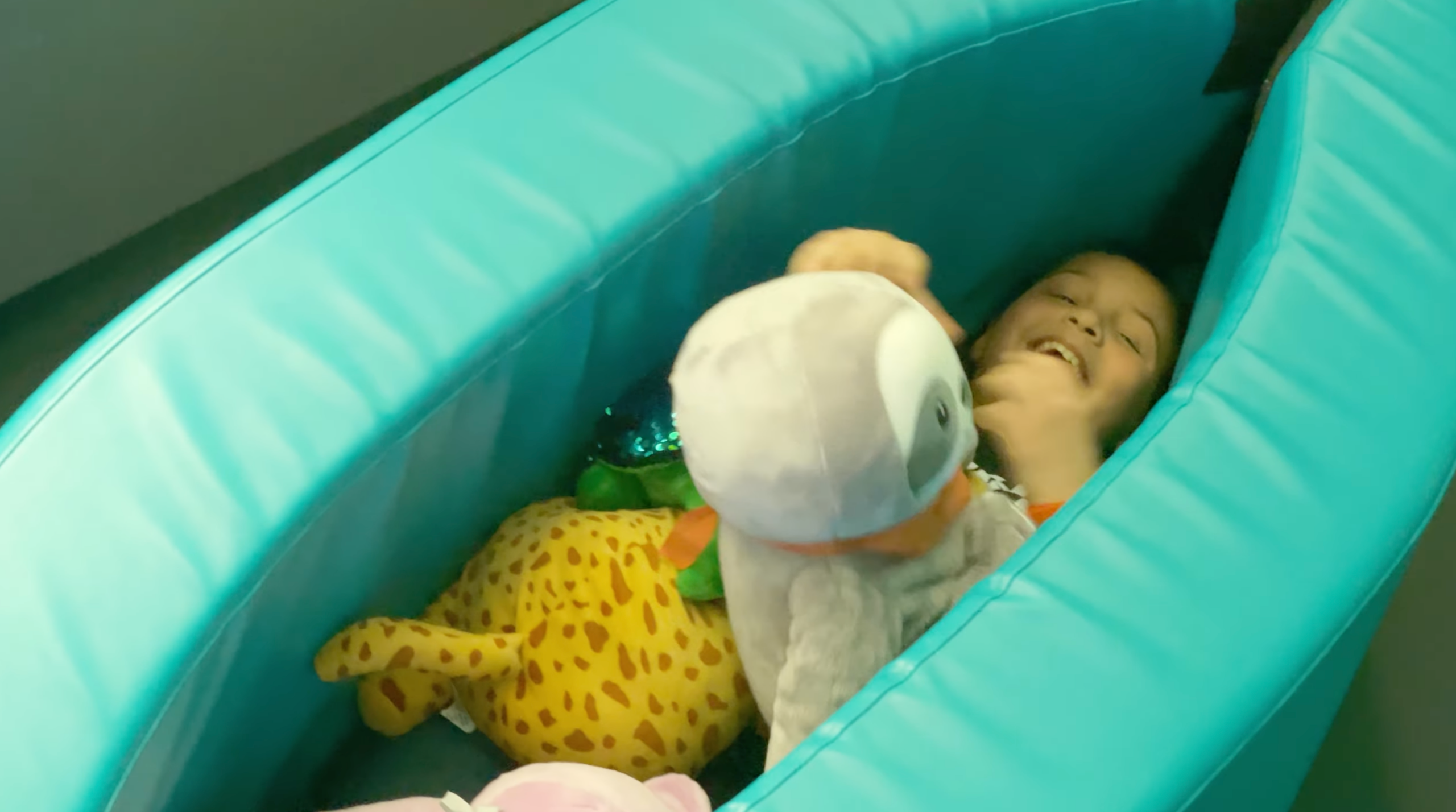
If you have ever watched a child shake out their hands after writing for a long time, or noticed a student rocking in their chair during a lesson, you have seen someone trying to regulate their sensory system. For students with special needs, these moments happen more often and with more intensity. The good news is that one of the simplest and most effective tools available costs nothing and takes just a few minutes: a sensory break. At Alpha School in Jackson, NJ, sensory breaks are built into the school day because we know they are not interruptions to learning. They are what make learning possible.
What Is a Sensory Break?
A sensory break is a short, intentional pause that gives a student's nervous system a chance to reset. It is not a reward, and it is not a consequence. It is a tool. Depending on the student, a sensory break might involve deep pressure activities like wall push-ups, movement like jumping or walking, calming input like listening to music with headphones, or tactile activities like squeezing a stress ball. The specific activity depends on what a student needs in that moment, and the right choice can vary from day to day or even hour to hour.
Why Sensory Breaks Work
When a student's sensory system is either overwhelmed or under-stimulated, their brain shifts into survival mode. They are no longer processing what the teacher is saying or following the steps of an activity. They are just trying to cope. A well-timed sensory break brings the nervous system back to a place where attention and engagement are possible again.
Research in occupational therapy supports what teachers and parents see every day: students who get regular sensory input throughout the day are more focused, less likely to have behavioral incidents, and more available for instruction. That is why Alpha School's occupational therapy team works with classroom staff to build sensory breaks into each student's schedule, not as an afterthought, but as a core part of the plan.
What Sensory Breaks Look Like at Alpha School
At Alpha School, sensory breaks take many forms depending on the student and the setting. In the classroom, a student might use a wobble cushion, take a short walk to deliver something to the office, or spend a few minutes with a fidget tool. For students who need more intensive input, our sensory room provides a dedicated space with equipment designed to help students regulate through movement, deep pressure, and calming activities. It is not a time-out room. It is a place where students go to get what their body needs so they can return to the classroom ready to participate.
Our behavioral team and therapists work together to identify what input each student responds to best, and they share those strategies with everyone who works with that student. That consistency turns a single break into a reliable system of support.
Sensory Breaks Beyond the Classroom
Sensory needs do not stop when the lesson ends. Transitions, lunch, recess, and adaptive physical education all come with their own sensory demands. A student who handles math class well might fall apart at lunch because the cafeteria is loud, crowded, and unpredictable. Alpha School's life skills program addresses these real-world situations, helping students learn to recognize when they need a break and how to take one independently.
How Families Can Use Sensory Breaks at Home
The strategies that work at school can work at home too. Parents can build short sensory breaks into homework time, use movement activities before meals or bedtime, and create a calm corner with tools like blankets, headphones, or textured objects. The key is to treat sensory breaks as part of the routine rather than something that happens only when things go wrong. When a child learns that regulation is something they can practice all day, not just something an adult imposes during a meltdown, it becomes a life skill.
If your child has sensory processing needs and you would like to learn more about how Alpha School integrates sensory support throughout the day, reach out to us to start the conversation and, along with your district, take a tour of Alpha School.
Frequently Asked Questions
A sensory break is a short, planned pause in a student's day that provides specific sensory input to help their nervous system regulate. It might include movement, deep pressure, calming activities, or tactile tools. Sensory breaks are used proactively as part of a student's daily routine, not only in response to behavioral incidents.
The frequency depends on the individual student's needs. Some students benefit from a brief sensory break every 20 to 30 minutes, while others may need them less often. Occupational therapists work with teachers and families to determine the right schedule and adjust it based on how the student responds.
A sensory room is a dedicated space with specialized equipment designed to help students regulate their nervous system. At Alpha School, the sensory room includes tools for movement, deep pressure, and calming activities. Students visit the sensory room as part of their daily schedule or when they need additional support to return to a regulated state.
Yes. Many sensory break strategies are simple and can be easily adapted for home use. Parents can offer movement activities, create a calm space with sensory tools, and build short breaks into routines like homework and mealtimes. Consistency between school and home helps students develop the ability to self-regulate across all settings.

Alpha School a private special education school in New Jersey
Our mission at the Alpha School of Jackson, NJ, located just minutes off of Route 9 and Route 195 in Ocean County, is to help all of our special needs students with the learning, social, language, and behavioral support they deserve. Our highly skilled staff are committed daily to helping each student become the best they can while providing a safe and nurturing educational environment.
We would be more than happy to discuss your child’s specific needs and challenges, so please call us at 732.370.1150, with any questions. To get started, please contact your District's Case Manager.
— John Gonzalez, Principal-Alpha School, Jackson, NJ